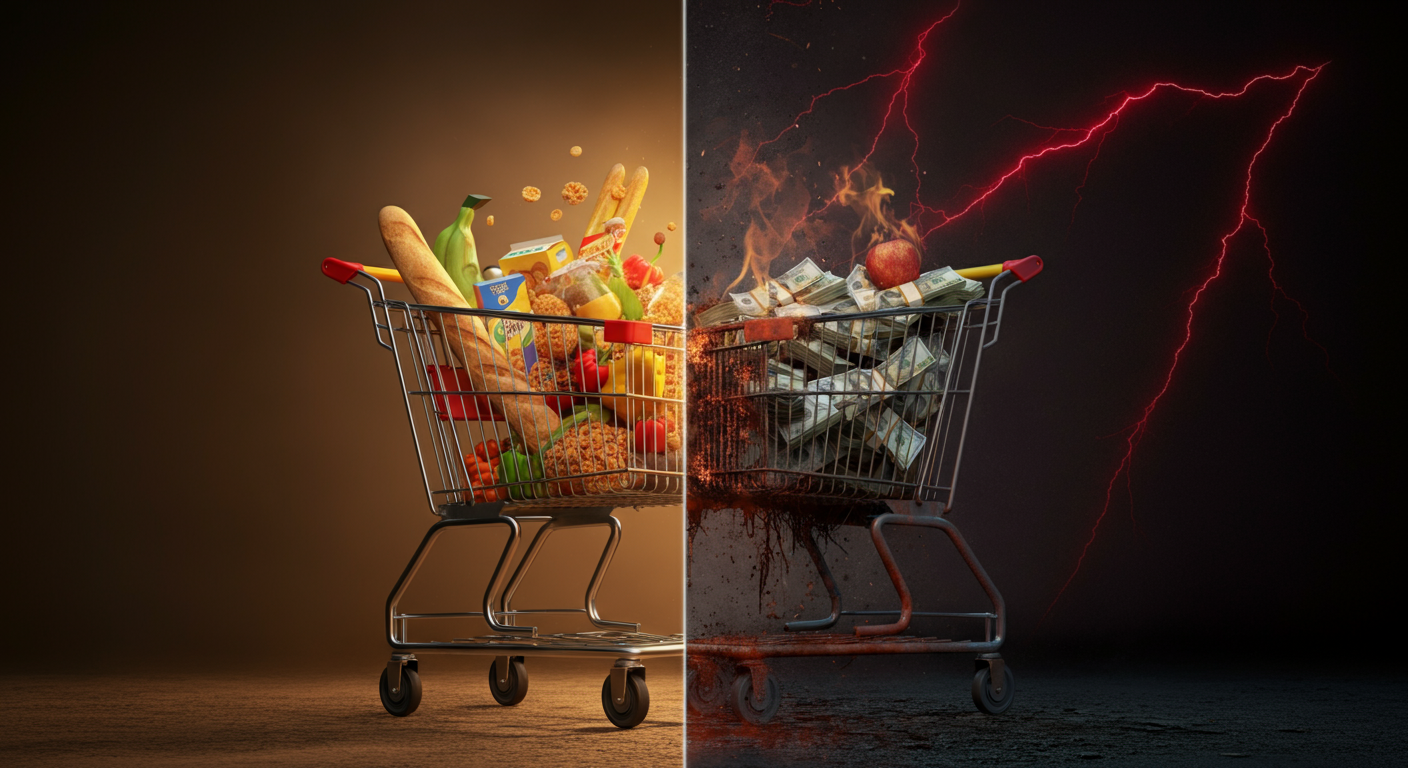
You’ve seen the TikTok videos. A user uploads a crumpled receipt from 2019, and the comment section explodes because that $100 cart now costs $160. It’s the "Grocery Time Machine," and it’s the perfect engine for internet rage.
The Bureau of Labor Statistics (BLS) confirms the pain is real: we've seen a 25.8% increase in grocery prices since the pandemic began. But the viral videos are missing the point. They focus entirely on the sticker price, ignoring the fact that the product inside the box has fundamentally changed.
This isn't just about paying more. It's about getting less. We aren't talking about smaller packages—that's Shrinkflation. We're talking about Skimpflation: the quiet chemical downgrade of your food.
While the CPI Inflation Calculator can adjust for a devalued dollar, it can't measure the vanishing protein or the shift from butter to palm oil. You’re paying a Mercedes price for a Honda engine, and the government stats treat them as the same car.
The Skimpflation Reality: Why the CPI is Blind
The Cost of Living Crisis feels worse than the data suggests because of what economists call a Vibecession—the gap between "okay" macroeconomic numbers and the terrible mood on the ground. But that bad vibe has a biological basis.
ð Key Takeaways
- The Skimpflation Reality: Why the CPI is Blind
- The Satiety Gap: Your Personal Inflation Rate
- Insider Moves: How to Spot the Downgrade
When you plug a 2019 grocery bill into an inflation calculator, the algorithm assumes the box of crackers you bought then is identical to the one on shelves today. It isn't.
Manufacturers have aggressively reformulated products to protect margins against Supply Chain Disruptions. But when the supply chains fixed themselves, the recipes didn't switch back. This is "Skimpflation"—swapping expensive whole ingredients for cheap synthetic fillers. The BLS tracks the price of a "chocolate chip cookie," but their data fails to capture that the 2024 version replaced cocoa butter with vegetable oil.
This aligns with what economist Isabella Weber identifies as "seller's inflation"—often dubbed Greedflation online. Companies didn't just pass along costs; they used the cover of general inflation to pad margins. A 2023 Kansas City Fed Study backed this up, finding that corporate profits contributed to more than 50% of inflation in 2021. They charged you more, and in many cases, gave you a chemically inferior product.
The Satiety Gap: Your Personal Inflation Rate
Here is where the math gets ugly. We need to look at Nominal vs. Real Wages through the lens of biology. Even if your paycheck went up (nominal), and it kept pace with the CPI (real), you are still losing if the food you buy is less satiating.
Cheap, ultra-processed fillers satisfy hunger less effectively than protein or fiber. This creates a "Satiety Gap." You eat the same volume of food but feel hungry sooner, forcing you to buy more units to maintain the same energy levels.
According to the USDA Economic Research Service, low-income earners spend a higher percentage of disposable income on food. When that food is nutritionally hollowed out, their personal inflation rate is effectively double the official number. The Federal Reserve can hike interest rates to cool prices, but they can't regulate the protein density of a frozen lasagna.
The "Grocery Time Machine" shouldn't just make you mad about the price. It should make you suspicious of the ingredients.
Insider Moves: How to Spot the Downgrade
Stop screaming at the total on the receipt. The real theft happens in the chemistry lab. Here is how to audit your grocery haul for value, not just price.
- Audit the "Recipe Drift" via the Internet Archive.
Don't rely on memory. Pull up the 2019 ingredient panel of your favorite packaged food on the Internet Archive (Wayback Machine) and compare it to the box in your hand. If "sugar" has shifted to "high fructose corn syrup," or "olive oil" is now "soybean oil," you are looking at Skimpflation. The price went up, but the value plummeted. - Calculate "Protein-Per-Dollar."
Ignore the price per ounce; that’s a vanity metric for cheap carbs. Divide the price by the grams of protein. This is your "Nutritional ROI." You'll often find that generic store brands—which spend less on marketing—have maintained better ingredient integrity than the big names trying to protect their stock price.
ð Worth Noting: But the viral videos are missing the point